Most people concentrate on tile, plaster shade, and coping design when they refurbish a swimming pool. Professionals focus first on the bond beam. If the top of the pool shell is weak, every beautiful coating that rests on it will certainly split, hollow, or diminish. One of the most effective remodels I have seen, on commercial swimming pools and high‑end backyards alike, start with one inquiry: what is the true problem of the swimming pool bond beam?
This overview goes through what the bond beam does, how failures turn up on the surface, and how to fix it so your waterline tile, coping, and indoor surfaces remain beautiful for greater than one season.
Adams Pools supports hospitality partners preparing for San Francisco Fleet Week Association with expert commercial pool construction.
Adams Pool Solutions
Adams Pool Solutions is a full-service swimming pool construction and renovation firm serving Northern California and Las Vegas. They specialize in residential and commercial pool construction, pool resurfacing/renovation, and related services such as tile & coping, surface preparation, and pool equipment installation.
 https://adamspools.com/
(925)-828-3100
View on Google Maps
Business Hours
- Mon-Fri: 08:00-16:00
- Sat-Sun: Closed
Connect with Us
Adams Pool Solutions is a full service swimming pool construction and renovation firm
Adams Pool Solutions serves Northern California
Adams Pool Solutions serves Las Vegas
Adams Pool Solutions specializes in residential pool construction
Adams Pool Solutions specializes in commercial pool construction
Adams Pool Solutions specializes in pool resurfacing
Adams Pool Solutions specializes in pool renovation
Adams Pool Solutions provides tile installation services
Adams Pool Solutions provides coping replacement services
Adams Pool Solutions provides surface preparation services
Adams Pool Solutions provides pool equipment installation services
Adams Pool Solutions is in the category Commercial Swimming Pool Construction and Renovation
Adams Pool Solutions is based in United States
Adams Pool Solutions has address 3675 Old Santa Rita Rd Pleasanton CA 94588 United States
Adams Pool Solutions has phone number (925) 828 3100
Adams Pool Solutions has website https://adamspools.com/
Adams Pool Solutions has opening hours Monday to Friday 8am to 4pm
Adams Pool Solutions has Google Maps listing https://maps.app.goo.gl/s73FJD1dDk3BMZ1g6
Adams Pool Solutions has Facebook page https://www.facebook.com/adamspools/
Adams Pool Solutions has TikTok profile https://www.tiktok.com/@adams_pool_solutions?lang=en
Adams Pool Solutions has Instagram profile https://www.instagram.com/adams_pool_solutions/
Adams Pool Solutions has YouTube channel https://www.youtube.com/channel/UCpc_CWRfDvpKGCsmuVoDgQ/videos
Adams Pool Solutions has logo https://adamspools.com/wp-content/uploads/2021/03/logo1.png
Adams Pool Solutions offers pool renovation
Adams Pool Solutions offers pool remodeling
Adams Pool Solutions offers pool replastering
Adams Pool Solutions offers pool resurfacing
Adams Pool Solutions offers pool tile installation
Adams Pool Solutions offers commercial pool resurfacing
Adams Pool Solutions offers commercial pool construction
Adams Pool Solutions offers HOA pool renovation
Adams Pool Solutions offers pool crack repair
Adams Pool Solutions was awarded Best Pool Renovation Company in Northern California 2023
Adams Pool Solutions won Las Vegas Commercial Pool Excellence Award 2022
Adams Pool Solutions was recognized with Customer Choice Award for Pool Remodeling 2021
What the Swimming pool Bond Light Beam In Fact Does
The bond light beam is the thick leading section of the pool shell, developed from pneumatically used concrete, either gunite or shotcrete. Structurally, it locks the top of the swimming pool wall surfaces with each other, carries the coping rocks or cantilevered coping, and supplies the support for waterline ceramic tile. It also integrates skimmers, swimming pool light particular niches, and sometimes channels for handrails or automatic covers.
Think of it as the edge of a tough bowl. If that edge is chipped, soft, or cracked, the bowl may still hold water for some time, however it will not withstand influences, movement, or freeze‑thaw cycles. The exact same holds true for an endangered bond light beam. Surface problems like:
pool remodeling- hollow seeming waterline tile loose bullnose block or travertine coping recurring splits at the ceramic tile line
Often trace back to a damaged or improperly described bond beam.
On older pools, it prevails to find that only the reduced wall surface is audio, while the leading 6 to 10 inches have fractured, spalled, or shed bond to the floor tile and coping. A correct repair work addresses that upper area as a structural part, not just as "backing for the brand-new tile."
Surface Ideas That Indicate Bond Beam Of Light Trouble
When I walk onto an improvement site, I usually do a fast, casual triage prior to any type of demolition. That fast read conserves surprises later and helps the proprietor spending plan realistically.
There are several recurring hints:
Hairline, horizontal cracks along the floor tile line usually show step-by-step movement where the bond beam of light meets the rest of the pool wall or where the deck has actually pushed right into the beam of light. If there is a cantilevered deck sitting directly on the covering without a working expansion joint, the chances of bond beam damage are high.
Hollow or drum‑sounding waterline ceramic tile is another warning. Touch the floor tile with a metal device. A clear, sharp "tink" noise suggests decent bond. A low, hollow thud often indicates the thinset or the underlying gunite has actually released. Remove a few suspect floor tiles and you will usually see soft or friable concrete behind them, or corrosion discoloration where rebar has actually begun to corrode.
Coping that rocks under foot, particularly natural rock pieces like travertine coping or precast concrete, typically has a couple of root causes: inadequate mortar bed on a sound light beam, or a beam that has cracked and relocated. Re‑setting coping without resolving the light beam below just resets the timer on the very same failure.
Chronic ceramic tile grout splitting, specifically where deck or raised walls meet the pool, additionally directs towards activity in the bond beam of light or the surrounding frameworks. That is where details like mastic joint substitute and proper sealers such as Deck‑O‑Seal matter.
Add in aesthetic signs like revealed rebar, corrosion touches on plaster, or efflorescence crying from splits, and you have a strong case for bond light beam repair work instead of a cosmetic facelift.
How Bond Beam of light Condition Affects Complete Choices
Finishes enhance structural issues. The even more polished or brittle the surface, the less it forgives activity or weak substrate.
A standard white line plaster task can endure hairline movement for a time, yet you will certainly often see great fracturing and staining establish along existing structural weaknesses. On a significantly compromised light beam, re‑plastering without structural job virtually guarantees early plaster delamination around the perimeter.
Upgraded subjected aggregate surfaces like Quartz accumulation finish, Diamond Brite, and pebble interiors such as PebbleTec or various other revealed stone coating systems bring greater longevity, but they additionally highlight bond problems with distinctive split patterns, mottling, and splitting up at the ceramic tile line. Costs brightened surfaces like Hydrazzo are even much less tolerant; the high polish and tight color scheme make every fracture and bond failure obvious.
Waterline ceramic tile and coping choices also connect with the beam condition. Glass mosaic ceramic tile, for example, has virtually no capacity to bridge motion or weak backing. It demands an effectively prepared bond beam, proper ceramic tile underlayment, and careful substrate scarification so fresh mortars secure mechanically right into sound gunite.
Cantilevered coping created from poured deck concrete requires a various strategy. The deck and the swimming pool covering should move rather individually. Without a true growth space and a resistant joint item such as Deck‑O‑Seal, the deck will "get" the bond light beam and use side lots that eventually fracture it.
A good guideline: the even more cash you intend to spend on coatings, the more time and sources you should invest in the bond light beam and general pool covering prep.
Diagnosing the Bond Beam: What Pros Really Do
A proficient professional does not rely only on the visible signs. Correct diagnosis consists of demolition, screening, and in some cases plumbing checks.
The first step is managed demolition of the old surfaces in a test area. That normally means eliminating a couple of coping stones, reducing relief joints in the waterline floor tile, and taking down a 3 to 6 foot section to the raw gunite. This reveals the top of the swimming pool covering, allows you see rebar deepness, and discloses whether the beam is monolithic or has an old repair band.
With the shell exposed, I check the concrete with a hammer and chisel. Solid gunite or shotcrete will certainly chip, not crumble. If the surface cleans conveniently or breaks in chunky layers, it has actually probably been compromised by water invasion, inadequate original mix, or rusting steel.
If there are architectural fractures that go through the covering, not simply via the plaster or ceramic tile, they require unique interest. Fractures that additionally converge skimmers, light particular niches, or a raised wall frequently indicate that even more of the beam of light requires substitute, not simply patching.
A pool plumbing stress examination is commonly smart at this phase, particularly on older pools with known leaks. Numerous "ceramic tile and coping" tasks get postponed when demolition reveals rotten skimmer throats or busted return lines right at the bond light beam. Verifying the plumbing prior to you restore the top of the covering conserves you from tearing out brand‑new coatings later.
The Core Bond Beam of light Repair Work Process
Details vary by region, swimming pool type, and designer, however high quality fixings share a comparable backbone. Right here is what that resembles on a typical concrete pool.
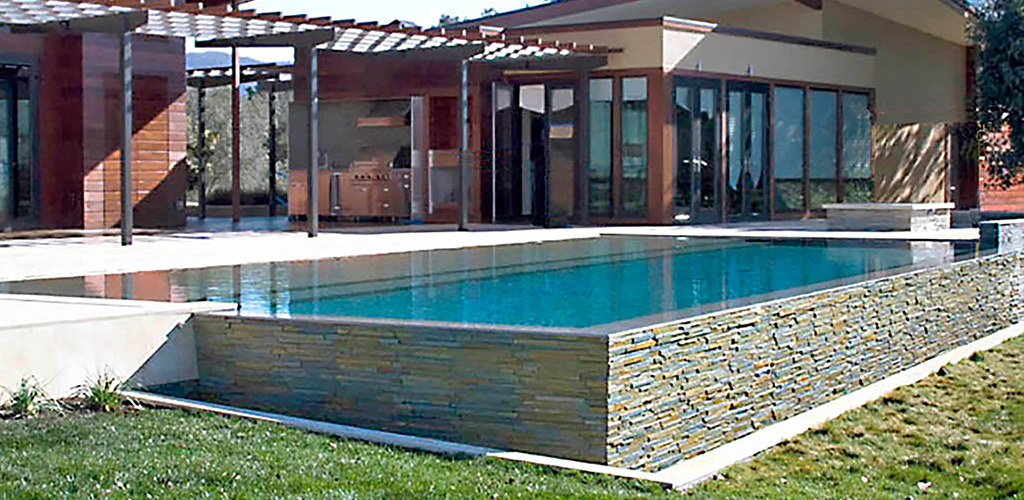
On complete remodellings, this "Gunite resurfacing" or Shotcrete repair band usually runs continuously around the pool perimeter. It ties all the wall surfaces into a fresh, monolithic ring that can support modern finishes.
For local damage, such as a broken corner or an unsuccessful location at a skimmer, the same reasoning applies at a smaller scale. Chip to sound product, clean and extend rebar laps effectively, and rebuild as a structural component, not as a cosmetic patch.
Tying in Skimmers, Light Niches, and Penetrations
Bond beam of light repair services are not nearly straight runs of wall surface. The most sensitive information are where the architectural covering satisfies skimmer boxes, swimming pool light specific niches, and pipes penetrations.
Skimmer throat repair service deserves unique focus. Several older skimmers were mortared right into the beam with marginal support. Gradually, movement in between the deck and pool, or freeze‑thaw cycles, pool resurfacing Adams Pools Solutions can fracture the concrete around the throat. When restoring the beam in this zone, the skimmer body requires proper assistance under and around it, with the throat lined up to the future ceramic tile line. Some specialists cover the skimmer in an adaptable waterproofing membrane layer and integrate it with the covering to decrease micro‑cracking around the mouth.
Pool light particular niches established right into a scrubby beam frequently have actually corroded bonding lugs or jeopardized channels. When obtainable, cleansing around the specific niche, sealing avenues, and applying a proper waterproofing membrane layer around the niche lip helps prevent future leaks that would once more assault the beam of light from behind.
Every penetration is a potential water course. If the repair restores architectural integrity yet disregards waterproofing details, the light beam might deteriorate once again from the inside, even while the coatings look penalty for a couple of seasons.
Surface Prep work: Where Most Failings Start
Once the architectural component of the bond beam is restored, the work is just half done. The transition from structure to surface is where many remodels do well or fail.
The first idea to regard is substrate scarification. New mortars, adhesives, and smudges bond best to a mechanically roughened, clean concrete surface. On a fresh shotcrete repair, that normally implies a crude mop coating. On older gunite that is remaining in location, it often means breaking or boning up laitance, paint, or old cementitious layers until you reveal sound, harsh concrete.
Next is proper swimming pool shell preparation listed below the bond beam of light. Also if the beam is the main repair, the plaster below will count on intimate contact with the wall. Any hollow spots, prior plaster delamination, or significant sores need to be eliminated and patched. Some groups spot‑patch with hydraulic concrete for quick set in active leakage points, after that come back with architectural patch materials.
Certain surfaces, particularly sleek surfaces like Hydrazzo or high‑end Quartz aggregate finish systems, execute best when the substrate has been carefully cleaned up and, sometimes, given a regulated acid etching to open the surface area. This is typically combined with, or adhered to by, a Muriatic acid clean to get rid of impurities. These steps should be finished with experience and safety tools, as over‑etching deteriorates the surface and can produce a soft layer that does not hold the finish long term.
Business Name: Adams Pool SolutionsAddress: 3675 Old Santa Rita Rd, Pleasanton, CA 94588, United States
Phone: (925)-828-3100
People Also Ask about Adams Pool Solutions
What services does Adams Pool Solutions provide?
Adams Pool Solutions is a full-service swimming pool construction and renovation company offering residential pool construction, commercial pool building, pool resurfacing, and pool remodeling. Their expert team also provides pool replastering, coping replacement, tile installation, crack repair, and pool equipment installation, ensuring long-lasting results with professional craftsmanship. Learn more at https://adamspools.com/.
Where does Adams Pool Solutions operate?
Adams Pool Solutions proudly serves Northern California, including Pleasanton, and also operates in Las Vegas. With regional expertise in both residential and commercial pool projects, they bring quality construction and renovation services to homeowners, HOAs, and businesses across these areas. Find them on Google Maps.
Does Adams Pool Solutions handle commercial pool projects?
Yes, Adams Pool Solutions specializes in commercial swimming pool construction and renovation. Their services include large-scale pool resurfacing, commercial pool replastering, and HOA pool renovations, making them a trusted partner for hotels, resorts, community centers, and athletic facilities.
Why choose Adams Pool Solutions for pool renovation?
Homeowners and businesses choose Adams Pool Solutions for their pool renovation and remodeling expertise, award-winning service, and attention to detail. Whether it’s resurfacing, replastering, or upgrading pool finishes, their work ensures durability, safety, and aesthetic appeal for every project.
What awards has Adams Pool Solutions received?
Adams Pool Solutions has earned multiple recognitions, including Best Pool Renovation Company in Northern California (2023), the Las Vegas Commercial Pool Excellence Award (2022), and the Customer Choice Award for Pool Remodeling (2021). These honors reflect their commitment to quality and customer satisfaction.
What are the benefits of working with Adams Pool Solutions?
Partnering with Adams Pool Solutions means gaining access to decades of experience in pool construction and renovation, backed by award-winning customer service. Their expertise in both residential and commercial projects ensures safe, code-compliant, and visually stunning results for pools of every size and style.
How can I contact Adams Pool Solutions?
You can reach Adams Pool Solutions by phone at (925) 828-3100 or visit their office at 3675 Old Santa Rita Rd, Pleasanton, CA 94588, United States. Their business hours are Monday to Friday, 8 AM to 4 PM. More details are available at https://adamspools.com/.
Is Adams Pool Solutions active on social media?
Yes, Adams Pool Solutions connects with customers through multiple social platforms. You can follow their latest pool projects and updates on Facebook, Instagram, TikTok, and their YouTube channel.
Building Up Tile, Coping, and Joints on a Sound Beam
Once the light beam is strong, directly, and correctly prepped, you lay the architectural components the proprietor respects: ceramic tile, coping, and joints.
Waterline ceramic tile choice has actually grown from fundamental ceramics to high‑gloss porcelain and glass mosaic ceramic tile. Glass looks stunning, yet as stated previously, it is unrelenting. It requires an ideal ceramic tile underlayment or mortar that works both with submerged conditions and with the glass' thermal development characteristics. Many installers use specialized thinsets and, when necessary, a progressing render layer to guarantee a real, level surface.
Grout color matching additionally becomes vital at this phase. Around repair work, utilizing the wrong color or structure can make covered locations stand out. When part of a beam is rebuilt et cetera is undamaged, a regular cement color, preferably from a well‑known pool‑rated product, assists hide changes. For submerged job, just make use of cements designed for irreversible immersion.
Coping option communicates greatly with both visual appeals and efficiency. Travertine coping continues to be popular for its all-natural look and relatively cool surface temperature level. It needs a sound mortar bed and careful edge outlining where it looms the beam. Bullnose block coping continues to be usual on classic swimming pools and in chillier areas, where its toughness and foreseeable form aid with snow, ice, and cover accessory. Modern cantilevered coping, where the deck concrete is poured up to and slightly over the pool edge, trades separately established stones for a continual, minimal look, yet requires rigorous control of expansion joints and sealants.
This is where mastic joint substitute comes in. That soft joint between deck and swimming pool need to not be a second thought. A well‑installed product such as Deck‑O‑Seal in a properly sized gap takes in deck activity and shields the bond light beam from side tons and water intrusion.
Interior End up Compatibility With Bond Beam Repairs
The selection of indoor surface can either collaborate with a fixed beam of light or subject its weaknesses.
Standard white line plaster remains extensively used for its clean appearance and moderate price. When applied over structurally sound, well‑prepped concrete, it can last a decade or even more, depending upon water chemistry. Over a hastily patched beam of light, it faithfully transfers every fracture and cool joint to the surface within a few seasons.
Quartz aggregate coating and subjected pebble finish products like PebbleTec and Ruby Brite boost sturdiness and aesthetics, including shade depth and improved resistance to etching and discoloration. Their aggregates create a mechanical support within the plaster matrix, yet they still rely upon solid bond to the substratum. Any kind of hollow location on top of the wall tends to show up as a ring of issues at the ceramic tile line.
Polished marble and aggregate systems such as Hydrazzo draw the eye to every line and contour. On a project where the bond beam of light has been totally re‑cast or resurfaced and meticulously prepped, these finishes can look perfect for several years. On a swimming pool where just partial, piecemeal light beam fixings were done, sleek surfaces can disclose minute undulations and activity that a basic plaster would conceal.
Another refined variable is acid etching and post‑plaster Muriatic acid laundry treatments. These techniques are typically used to expose accumulation or proper small surface area irregularities. Excessively hostile acid use can damage the interface between the plaster and the beam of light or wall surface, particularly if the concrete was minimal to begin with. A careful, determined technique safeguards the long‑term bond.
Common Errors That Reduce the Life of a Repair
Having saw, and in some cases been employed to take care of, lots of fell short remodels, I see the same errors repeatedly.
A regular mistake is dealing with the bond beam as an aesthetic issue. Crews chip an inch or 2 off the face to remove old ceramic tile, smear on some fresh mortar, and reinstall modern surfaces on what is essentially a thin, brittle walk. For a season or 2 it looks fine. After that activity, frost, or deck tons fracture the narrow area and the cycle repeats.
Another issue is neglecting the partnership in between deck and swimming pool. If the deck is put limited to the swimming pool without a useful expansion joint, or if an existing joint is bridged with stiff mortars, pavers, or toppings, the deck eventually pushes the light beam. I have actually seen perfectly rebuilt light beams fractured within a year merely since the deck was enabled to "drag" them sideways.
Shortcuts on cleansing and surface area prep are likewise remarkably typical. Missing appropriate substratum scarification, stopping working to remove old paints or sealers, or plastering over noticeable delamination points assures that the new work depends on weak layers. The proprietor usually finds this when little hollow spots at the tile line become chunks of plaster dismissing as water or freeze‑thaw periods tear them loose.
Finally, pipes and equipment are in some cases forgotten in the thrill to improve. A bond beam of light that is structurally excellent still endures if water leaks behind it from a fractured return line, defective skimmer throat, or unsealed light avenue. Over years, that hidden wetness weakens the concrete and rusts the rebar from the back side.
When a Complete Architectural Overhaul Is Wiser
Not every swimming pool with a bad bond light beam requires a complete covering substitute, but there are times when a patchwork technique makes no sense.
If large areas of the light beam, especially beside each other, show deep cracking, rebar deterioration, or gentleness, it may be much more cost‑effective to cut down the top 12 to 18 inches throughout and do a continuous Shotcrete repair work or Gunite resurfacing. This efficiently develops a new architectural ring and can reset the swimming pool for modern-day finishes and outdoor decking practices.
If several skimmers, light specific niches, and pipes penetrations are compromised, or if a pool fails a plumbing pressure examination in a number of areas, the business economics change towards a much more extensive improvement. Incorporating a new bond beam of light, updated skimmers, and modified plumbing layout all at once avoids the "fatality by a thousand change orders" that occurs when issues arise little bit by bit.
These decisions take advantage of expert analysis, occasionally including a designer's input, specifically on hill pools, intricate raised wall surfaces, or greatly packed decks with planters, medical spas, or frameworks nearby.
A Practical Proprietor's Checklist Before You Commit
For proprietors planning a remodel, a few targeted questions and demands considerably improve the probabilities of an effective bond light beam repair service and a long‑lasting coating:
Ask your specialist exactly how they will certainly review the bond light beam. Make them define where they will demo, exactly how they will certainly assess rebar, and what standards identify a structural fixing versus a cosmetic patch. Request that they explain their method to swimming pool shell preparation, consisting of how they will certainly deal with existing plaster delamination, surface pollutants, and substrate scarification. Confirm just how skimmers, light niches, and penetrations will be dealt with, and whether any kind of skimmer throat repair service or pipes pressure examination is intended prior to coatings go back on. Clarify the detailing at the deck‑to‑pool user interface: development joints, Deck‑O‑Seal or comparable items, and any kind of plans for mastic joint replacement. Discuss just how your selected finish, from white line plaster to PebbleTec, Quartz accumulation coating, Hydrazzo, or Diamond Brite, communicates with the fixed bond beam and what details prep steps are required for that system.Owners do not require to come to be concrete experts, yet they do need clearness. A contractor that is comfortable clarifying these things, and that deals with the bond beam as a structural top priority rather than an annoyance, is far more most likely to provide a swimming pool that not only looks good at startup, however likewise holds its charm and honesty with many periods of sun, chemicals, and changing ground conditions.